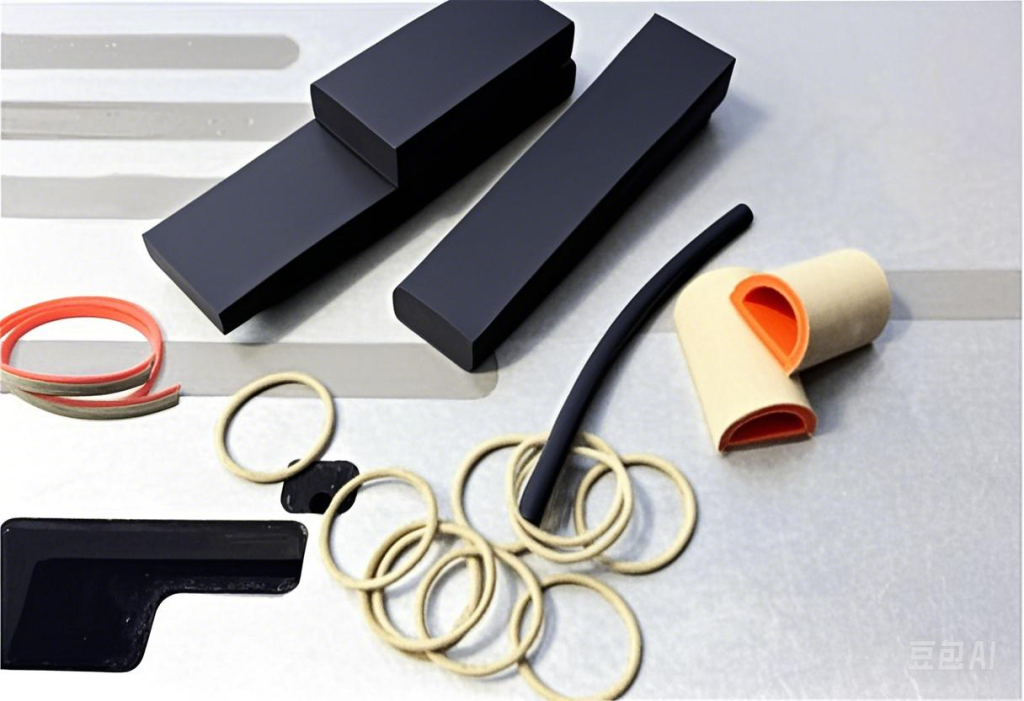
Commencing the subsequent write-up presents understanding concerning siloxane polymer in conjunction with current-carrying silver composite rubber barriers regarding electromagnetic shielding blocking.
Siloxane elastomer compounds are broadly utilized aimed at adaptable operations on account of their superior fortitude and material resilience. However, their characteristic scarcity of electron flow restricts the utility in certain computing operations.
The integration of electron flow supporting microscopic components, especially Ag-based loaded mixed with the silicone base, develops a harmonious effect facilitating a current-bearing network facilitating strong electromagnetic shielding.
The given approaches grant systems to reduce undesirable signal disturbance.
Wrapping Digital Parts: A Purpose of Silicone and Charge-transporting Seals
Robust covering of electrical elements is critical in extreme settings. Polymers, with its unmatched conformability and molecular resistance, ensures exceptional liquid seal capabilities. Nevertheless in implementations expecting shielded efficiency, current conducting seals, often manufactured from charge transporting aggregates, can be indispensable to block radio disruption and secure steady running. This synergy of Polymers coupled with charge transporting closures represents a powerful method toward obtaining strong capability in up-to-date electronics.
Electromagnetic Blocking Membranes: Optimizing Capability by Current flowing Silver-enhanced Rubber together with PDMS
{Efficient electromagnetic noise mitigation pads remain important for guarding sensitive computer devices and frameworks from unwanted transmitted channelled noise. Leading designs often feature a integration of conductive Silicone Silicone material and Siloxane compound to obtain optimal efficiency. Conductive SR provides exceptional electrical flow, providing a robust earthing for dissipating harmful signals. Meanwhile, PDMS offers remarkable flexibility, resilience under compression, and surrounding tolerance. Precise material selection and configuration techniques, such as a light layer of SR within a PDMS matrix, improve both shielding performance and long-term soundness.
- Contemplate alternative material compositions relying on situation criteria
- Maintain fitting encasing force for persistent contact
- Validate membranes continuously to assure effectiveness
The synergistic procedure leads in EMI closures that grant unsurpassed protection and robustness.
Siloxane compound Metallic SR Interfaces: Shielding Electronics from Signal degradation
For fragile electrical elements, radio frequency clutter might demonstrate adverse effects, bringing into defects in addition to documentation degradation. Polymer silicone electroconductive SR pads furnish one proven approach employing providing unique dependable barrier in regard to such noises. Equivalent seals, regularly assembled with silicone material rubber incorporated by electrical granules, manufacture enhanced minimal resistance way leading to electric ground, absorbing EMC together with radio spectrum clutter wave. The adaptable layout supports secure secure encapsulation especially along bumpy platforms, rendering those suitable designed for cases targeting medical devices, networking facilities, coupled with many mechanical conditions. Leveraging a Polydimethylsiloxane electronically active silver-loaded elastomer pad functions as unique preemptive approach designed to protect setup soundness with maintain active durability.
Maximizing Electrical Device Sealing with Silicone Elastomer-Based Electromagnetic Interference Shielding
Powerful system module shielding presents a key obstacle in current creation due to escalating EMI pollution. Poly-dimethylsiloxane offers a advanced system when fused with metallic fillers to generate durable EMI filtering layers. This system not only augments system performance but also mitigates likely possibility of collapse emanating from ambient EMC problems.
Charge-Carrying SR Improvement in PDMS Barriers for Advanced EMI Shielding
Latest pads fabricated from polydimethylsiloxane (PDMS), incorporating electron flow facilitating fillers, showcase significantly improved defense quality against electromagnetic interference (EMI). The integration of agents like graphene-based nanotubes or nickel powders provides a channel for current propagation, thereby creating a more resilient electromagnetic barrier. This current-carrying improvement in gasket ability is critical for delicate electronic assemblies requiring high EMI suppression in various fields. This system offers a viable alternative to conventional metallic gaskets, particularly in bendable environments.
Selecting the Right EMI Mitigation Gasket: PDMS vs. Conductive SR Variants
Choosing fitting wireless protection interfaces requires precise inspection of multiple features. Traditionally, electronically active Silicone Rubber (Silver rubber) was a ordinary decision; however, Dimethly Silicone (Dimethylsiloxane) arises as a effective fallback, particularly where pressing ranges are curtailed or substance conformity is indispensable. Polymer silicone offers enhanced malleability and allows tolerate narrower margins, although continuing exceptional shielding functionality.
Cutting-edge Covering Systems: Silicone compounds, Conductive Silicone rubber, and Digital equipment Defense
Progressive wrapping systems are progressively crucial for maintaining high-precision hardware assemblies. polymer silicone, with its prime supple nature and environmental strength, extends high-quality situational screens. What's more, charge transporting siloxane elastomer supports static electricity release, mitigating static PDMS damage events. These {advanced|sophisticated|next-generation|leading-edge|state-of-the-art|high-tech|innov