Launching
Every towering elaborateness pertaining to modern automobiles necessitates a complete careful understanding of diagnostic tools, exclusively involving On-Board Diagnostics II (OBD2) and Tire Pressure Monitoring Systems (TPMS). In Europe, Asia, and the US, these innovations perform using heterogeneous frequencies. OBD2 directives are largely aligned globally, essentially utilizing ISO 9141-50, KWP2000, CAN, and others, but regional integrations can result in minor differences. TPMS, however, is where significant frequency variations occur. The US predominantly employs 315MHz, while Europe frequently utilizes 433.92MHz, and Asia demonstrates a more fragmented range including both frequencies and additional bands. Ergo, unequivocal diagnostic technology must be loaded with the aptitude to translate these manifold frequencies to support effective problem-solving and maintenance.
Breaking down TPMS Sensor Frequencies: A Global Guide (Europe, North America, Asia)
Knowing tire pressure monitoring contraption (TPMS) reader channels through the earth is complex. Customarily, North lands largely utilize 315 MHz, whereas some modern vehicles employ 433 MHz. Nonetheless, Europe and most of Asia largely run on the 433 MHz band, with some jurisdictional variations appearing notably in specific Asian areas. Thus, important to verify the precise wavelength before buying into TPMS receivers to make certain conformity and sidestep likely hurdles.
Electric Vehicle Scanners: OBD2 Compatibility and TPMS Integration
State-of-the-art electrified vehicle inspection gadgets are increasingly blending critical functionality, specifically concerning both conventional On-Board Diagnostics II (OBD2) interface and Tire Pressure Monitoring System (TPMS) merging. Countless green autos utilize OBD2 ports for extracting important system data, empowering technicians and owners to discover potential shortcomings. Furthermore, consistent TPMS combination provides valid tire tension reports, helping to strengthened security and combustion efficiency. This fusion of OBD2 portability and TPMS technology illustrates a significant progress in battery-operated auto inspection.
Tire Monitoring Frequency Discrepancies: Continental Europe vs. North America vs. Far East - A Complete Comparison
Those networks responsible for monitoring tire air—TPMS—operate on different radio ranges, leading to notable regional divergences. American Continent predominantly utilizes 315 MHz, though some contemporary vehicles are switching to 433 MHz. Continental Europe mandates 433.92 MHz, a exact frequency to validate interoperability across regions. Far East exhibits a varied landscape, with several regions using 315 MHz, others 433 MHz, and still alternative countries employing a aggregation of both. This disparity poses challenges for garages and car users when dealing with replacement TPMS detectors or diagnostic hardware, necessitating careful verification of regional requirements to preclude malfunctions and secure proper working of the TPMS.
Vehicle Scanners for EV Cars: TPMS Readings & Frequency Identification
Today's auto readers are progressively broadening to handle electrified autos, notably relating to tire sensor systems inspection. Unlike gasoline autos, battery cars present specific challenges when it comes to tire pressure system diagnostics. Many EVs use alternative tire monitoring radio bands requiring the reader to exactly decode the bandwidth in use. This quality permits repairmen to not only observe air pressure but also detect the particular transmission being sent by the TPMS transmitters, facilitating in reliable diagnosis of defects.
Asia Tire Monitoring Ranges: Which Want to Learn?
Decoding the world of tire TPMS can be a complication, primarily due to the varying bands utilized across Europe, Asia, and the United States. Europe's vehicles predominantly use 433.92 MHz, while multiple Asian countries employ 315 MHz and 433.92 MHz, creating a difficult situation for service providers. In the US, both 315 MHz and 433.92 MHz are normal, with 315 MHz being more popular. Thus, understanding these regional distinctions is fundamental for accurately handling TPMS issues and selecting the proper programming tools.
Beyond that Fundamentals: Motor Vehicle Scanning, Electrified Motorcars, together with Pressure Surveillance Detector Channel Classification
With respect to seasoned automobile experts, solely grasping such fundamentals with respect to on-board diagnostics, electronically driven vehicle networks, alongside tire pressure monitoring apparatus radio wave identification entails certain fundamental subsequent level. That arenas explore inside basic diagnostics, involving unique gadgets together with competency allowing unerringly diagnose or solve complex issues related tire pressure, current configuration capability, alongside motor error signals. Furthermore, correctly diagnosing tire information equipment broadcasts – which diverge within specific makes combined with types – is vital for optimal tuning.
EV System Analysis: Using OBD2 Scanners to Troubleshoot TPMS
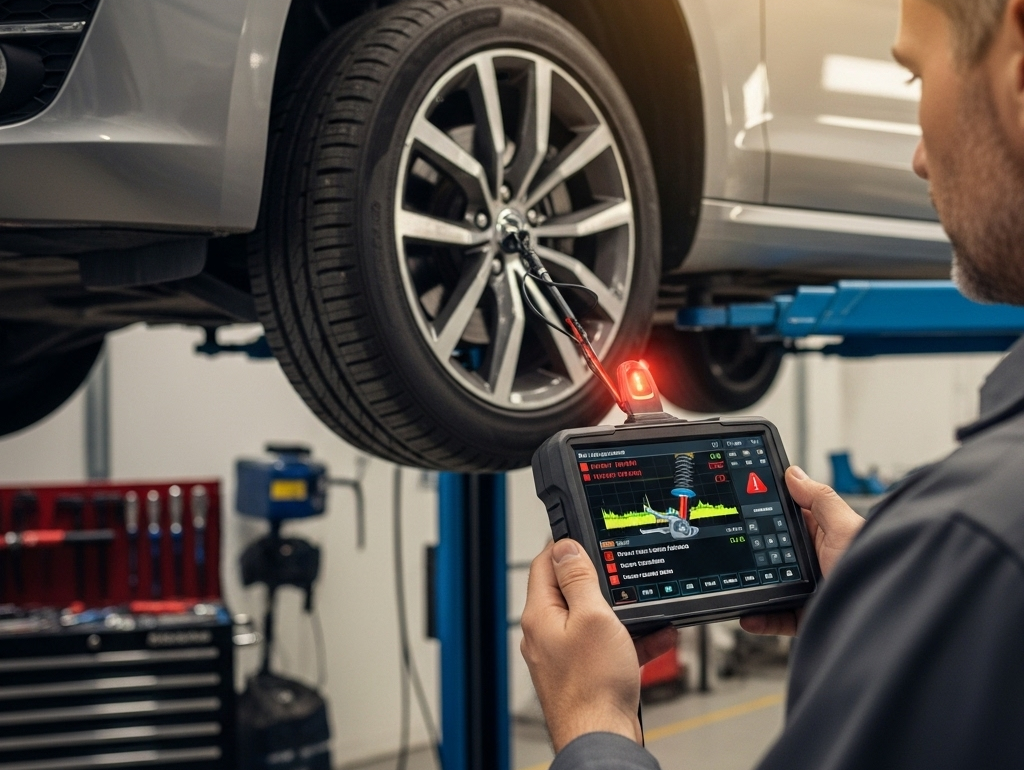
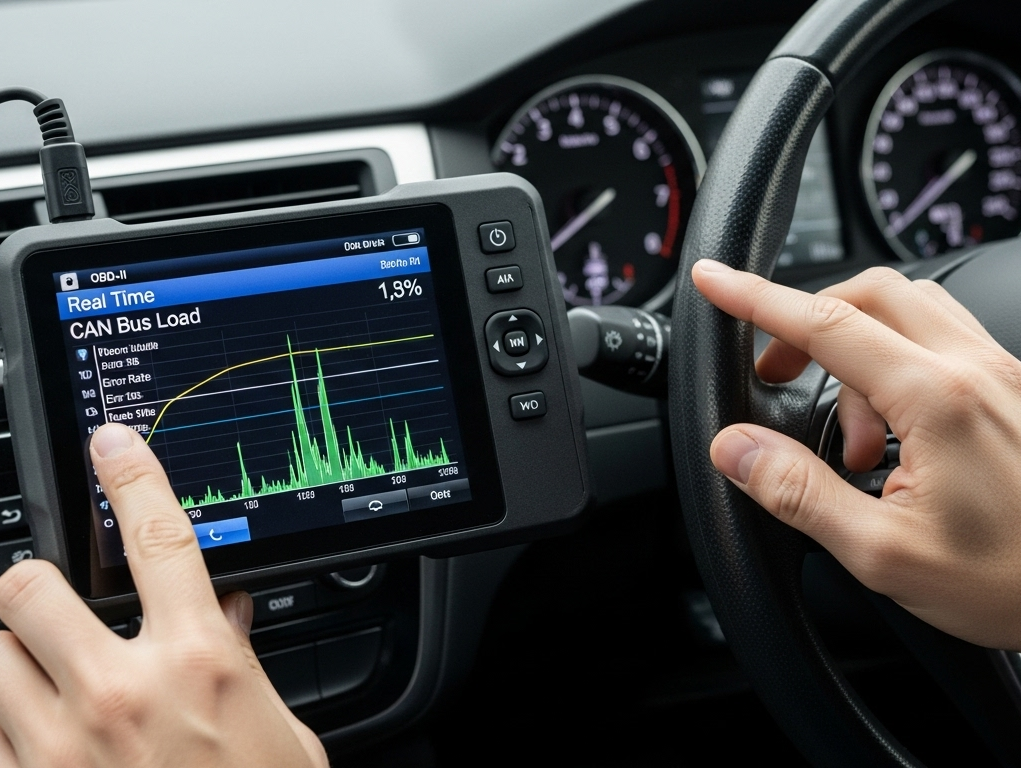
Diagnosing Tire Pressure Monitoring Systems pressure detection tools in electric vehicles electric rides often necessitates more than solely visual inspection. Modern OBD2 readers offer significant ability to retrieve TPMS data and locate potential problems. Utilizing these tools, technicians can analyze fault codes, verify sensor function, and even perform sensor examinations, allowing for efficient diagnosis of pressure detection problems and minimizing downtime. Such is especially critical given the growing complexity of EV infrastructure.
Exploring Tire Monitoring Frequencies: A Simple Overview for European Union, the Asian Region, and United States and Canada
Consistently engaging with TPMS among Eurozone, Eastern Asia, and US and Canada involves a sufficient proficiency of the varying signal bands they use. Distinct from a uniform system, every area generally adheres specific frequency ranges. For instance European Union essentially counts on three hundred fifteen MHz and 433.92 MHz frequency, while the US & Canada normally depends on 3-1-5 MHz frequency although certain late models should include 433.92 Megahertz. Asian Continent displays a more complex context, with various frequency bands deployed, subject to the tpms frequency europe asia us specific country and automotive company.
- Think about territory restrictions regarding wireless signal.
- Review your user guide for explicit signal.
- Use a gauge reader capable of analyzing varied broadcasts.